Why Italy works so well for Australian travellers
Landing in Italy after a long-haul flight from Australia feels strangely familiar. The late dinners, the easy warmth, the way conversations spill onto pavements in the city – it all echoes our own coastal evenings, just with better espresso and older stones. For an Australian traveller choosing a hotel in Italy, the country rewards those who think carefully about rhythm and location rather than chasing the most photographed lobby or the trendiest rooftop bar.
Rome is usually the first stop. The city suits Australians who like to walk, to graze through neighbourhoods, to feel the layers of Roman history underfoot rather than tick off monuments. A central hotel in Rome within walking distance of the Trevi Fountain or Piazza Navona lets you step out at dawn, when the marble is pale and the crowds have not yet arrived, then retreat to your room for a midday reset before the afternoon heat. From Fiumicino Airport, the Leonardo Express train reaches Roma Termini in about 32 minutes, while a taxi to the historic centre usually takes 40 to 50 minutes depending on traffic.
Beyond Rome, Italy opens into distinct worlds. The Amalfi Coast, the northern lakes, the Riviera and the Adriatic each offer a different kind of stay, from grand seaside hotels to discreet hilltop retreats. Australians used to space and sea views often gravitate towards coastal resorts, while those who love European city breaks may prefer a luxury hotel in a historic palazzo facing a Roman piazza or a Renaissance square in Florence. Typical nightly rates for four- to five-star properties range from around €250–€350 in shoulder season to well above €600 in peak summer in the most sought-after locations.
Choosing your Rome base: centro storico, gardens or quiet elegance
Standing on Via del Tritone at 07.30, watching office workers cut across towards the Trevi district, you understand why location matters more than almost anything else in a Rome hotel. Staying near the Trevi Fountain or Piazza Navona places you in the densest part of the historic centre, with cafés, gelaterie and small churches around every corner. It is atmospheric, intensely photogenic, and busy from early morning until late at night, so light sleepers may prefer rooms facing inner courtyards rather than main streets.
Move a little north towards Villa Borghese and the mood changes. Hotels in this area often have larger rooms, calmer streets and easier access to green space, which suits Australians travelling with children or anyone sensitive to noise. For example, Parco dei Principi Grand Hotel & Spa, overlooking the park, offers rooms from about 25–30 sqm, a full spa and an outdoor pool, with typical rates from roughly €280–€450 per night depending on season. You can walk down Via Veneto to the city centre in about 10 to 15 minutes, then escape back uphill when the crowds swell. It is a good compromise between immersion and breathing room.
On the western side of the Tiber, near the Vatican and Trastevere, the feel is more residential. Here, hotels on side streets may offer fewer grand lobbies but a stronger sense of everyday Roman life, with local markets and neighbourhood trattorie. A property such as Hotel Indigo Rome – St. George, part of the IHG group, combines a compact spa and rooftop terrace with rooms around 20–30 sqm and access to a global loyalty programme. For a first visit, a central location between the Trevi area and Piazza Navona remains the most practical choice, but repeat visitors often prefer these quieter quarters with easier access to the riverfront and less touristy dining.
What “luxury” really means in Italian city hotels
Marble bathrooms and a polished lobby do not tell the whole story. In Italy, luxury hotels often occupy historic buildings where the architecture dictates the layout, so you may find high ceilings and frescoes paired with slightly irregular room shapes. Australians used to new-build resorts sometimes need to recalibrate expectations: the charm lies in the patina, not in uniformity, and even five-star properties may have quirks such as a few steps between bedroom and bathroom or slightly smaller wardrobes.
In Rome, a true luxury hotel will usually offer a clear sense of place – perhaps a view towards a Roman basilica, original stone staircases, or a rooftop terrace where you can see domes and terracotta roofs at sunset. The Pantheon Iconic Rome Hotel, for instance, is part of the Autograph Collection, with a celebrated rooftop bar and rooms generally starting around 20–25 sqm, while Hotel de Russie near Piazza del Popolo is known for its terraced garden, family-friendly suites and higher price band, often from €700 per night in peak periods. Some properties belong to an international collection, such as a Curio Collection or a similar hotel collection, which can be reassuring if you like to earn or redeem points as a member of a loyalty programme. Others are independent, with a more idiosyncratic style and a stronger local accent.
Hotel spa facilities are another dividing line. In dense city blocks near Trevi or Campo de’ Fiori, space is tight and wellness areas tend to be compact, sometimes limited to a small pool and treatment rooms. Around Villa Borghese or in districts with larger footprints, you are more likely to find a full spa with thermal circuits and generous relaxation zones. Decide whether you want a city base with quick access to sights, or a more resort-like environment where the spa is part of your daily ritual. Checking recent traveller photos and descriptions on major booking platforms can help you gauge how extensive the wellness offering really is.
Rooms, suites and the reality of space for Australians
Australian travellers are often surprised by the size of standard rooms in Italian hotels. In central Rome, a classic double can feel closer to a well-designed cabin than a sprawling suite, especially in historic buildings. When you book, pay close attention to square metre figures rather than relying on labels like “superior” or “deluxe”, which vary widely between hotels and may cover anything from 16 sqm to more than 30 sqm depending on the property.
For longer stays or multi-city travel, consider upgrading at least once to a junior suite or a corner room. The extra space makes jet lag more bearable and gives you somewhere to sit other than the bed, particularly valuable if you are working remotely or travelling with another person. In some luxury hotels Rome offers, higher categories also bring better views – perhaps a glimpse of the dome of Sant’Agnese in Agone near Piazza Navona, or rooftops stepping down towards the river. In peak months, the price difference between a standard room and a junior suite can easily reach €150–€250 per night, so it is worth weighing comfort against budget.
Australians travelling with family should look for clearly described connecting rooms or suites with separate living areas. Not every Rome hotel has them, especially in older buildings where walls cannot easily be moved. Hotel de Russie, for example, is known for family suites and interconnecting options, while more compact boutique properties may only offer baby cots or sofa beds. If you are travelling with a pet, check in advance whether the property is genuinely pet friendly or simply allows animals in certain rooms; Italian regulations and house rules can be quite specific about where pets may go within the building, and some hotels charge a nightly cleaning fee.
Loyalty, cards and how to use points wisely
For frequent Australian travellers, the question is not only which hotel to choose, but how to make each stay work harder. If you hold a travel rewards card linked to a major hotel group, Rome is one of the better European cities to redeem points, especially in the shoulder seasons of spring and autumn. Properties that sit within a global collection, such as a Curio-style hotel or a collection Hilton brand, often allow you to combine cash and points, which can soften the impact of peak dates and school-holiday surcharges.
Using points for a luxury hotel in a prime location – for example, within walking distance of Trevi or the Spanish Steps – can be more valuable than stretching them across several lower-category stays. The benefit is not only the room itself but the time saved on daily logistics. You step out of the lobby and you are already in the city’s historic core, rather than starting each day with a commute. Many Australian-issued credit cards allow transfers to major hotel programmes, so checking transfer ratios and occasional bonus offers can significantly increase the value of your points.
Membership tiers also matter. A mid- or high-level member may receive room upgrades, late check-out or access to a small lounge, all of which are particularly useful when you are dealing with long-haul flight times from Australia. When comparing hotels and resorts across Italy, weigh up whether staying within one group to consolidate points is worth more to you than choosing a one-off independent property with a singular atmosphere. For longer itineraries, some travellers mix both: using points in Rome, then booking independent hotels on the coast or lakes where global chains are less common.
Beyond Rome: coastal icons and grand resorts for Australians
Once you leave the capital, the Italian coastline opens into a series of destinations that feel purpose-built for Australians who love the sea. On the Amalfi Coast, cliffside hotels look straight onto the Tyrrhenian, with private lifts or stairways down to small coves. These are not anonymous hotels or resorts; they are long-established houses where terraces are layered with citrus trees and the sound of boats carries up from the water. A property such as Hotel Santa Caterina in Amalfi, for example, combines a historic villa feel with sea-view rooms from around 20–30 sqm, a private beach club and rates that often exceed €700 per night in high season.
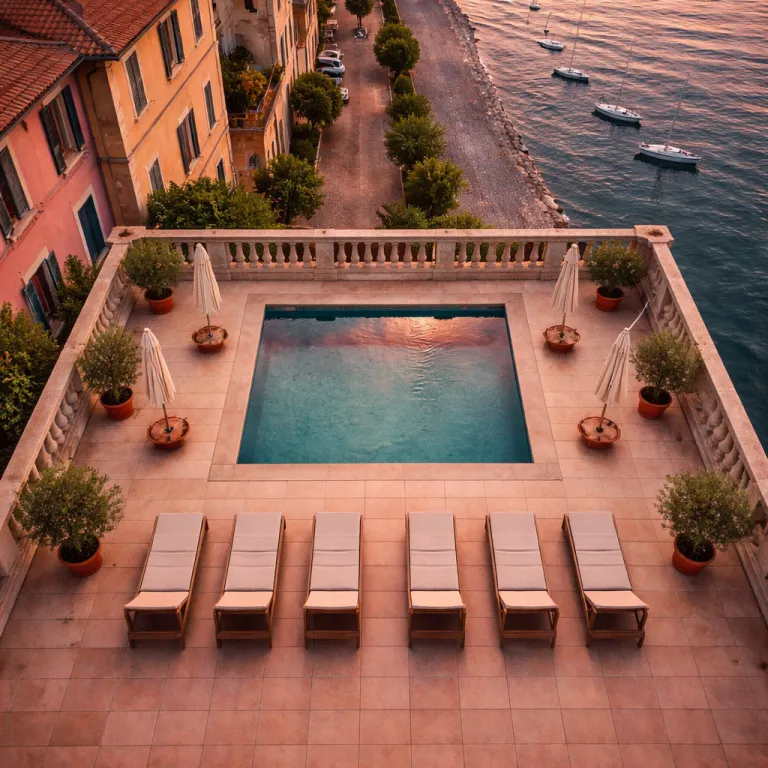
Further north, along the Ligurian Riviera and the Adriatic, grand seaside hotels face promenades and landscaped parks. In Rimini, for example, Grand Hotel Rimini sits by Parco Federico Fellini, a few minutes’ walk from the beach, with more than one hundred rooms and suites, a seasonal pool and a reputation for old-world glamour. Australians who grew up with surf beaches may find the orderly rows of umbrellas and sunbeds curious at first, but the ritual of an evening passeggiata along the lungomare quickly becomes addictive. On Lake Como, lakeside properties such as Grand Hotel Tremezzo offer resort-style facilities, multiple pools and gardens, with room sizes typically starting around 25 sqm and a price band that reflects their iconic status.
Lake and countryside resorts offer a different rhythm again. Here, the luxury lies in space, gardens and long views rather than in urban buzz. For an Australian traveller planning a longer Italy itinerary, a good pattern is to combine a few intense days in a Rome hotel with a slower stay at a coastal or lakeside resort, allowing time to decompress before the flight home. As a rough guide, driving times from Rome to the Amalfi Coast are around three hours, while high-speed trains from Rome to Milan for onward travel to Lake Como take about three hours, making multi-stop itineraries manageable even on a two-week trip.
Who Italian luxury hotels suit best – and what to check before you book
Italian luxury hotels suit Australian travellers who value atmosphere and location over uniformity. If you want flawless symmetry, vast rooms and a resort bubble, you may be happier in newer Mediterranean developments. If you enjoy layered history, slightly eccentric layouts and the sense that you are in a specific city rather than a generic space, Italy will feel like a natural fit. Guidebooks from reputable publishers and national tourism portals can be useful for cross-checking neighbourhood descriptions and typical price ranges before you commit.
Before you book, verify three things. First, the exact location: look at the street name and nearby landmarks, and decide whether you prefer to be near Trevi, Piazza Navona, Villa Borghese, the Vatican or a quieter residential quarter. Second, the room details: check size, bed configuration and whether the room faces an inner courtyard or a busy street, especially in central Rome where nightlife can run late. Third, any non-negotiables such as hotel spa access, pet policies or accessibility features, including lifts, step-free entrances and adapted bathrooms if required.
For Australians planning multi-stop travel, consider how each hotel fits into the broader journey. A compact, characterful room in the heart of Rome might be perfect for three nights of urban exploration, followed by a more expansive resort stay on the coast. Think of your Italy hotel choices as a small collection of experiences rather than a single decision, and the whole trip becomes more coherent. Keeping a simple spreadsheet or note with nightly rates, room sizes and loyalty benefits can also help you compare options quickly and avoid surprises on arrival.
FAQ
What is the best time for Australians to visit Italy for a hotel-focused trip?
Spring and autumn are the most comfortable seasons for Australians planning a hotel-focused trip to Italy. From April to early June and late September to October, the weather is generally mild, the city crowds are more manageable, and it is easier to enjoy rooftop terraces, hotel spa facilities and walking-distance sightseeing in Rome without extreme heat. These shoulder periods also tend to offer a wider choice of rooms across both city hotels and coastal resorts, with nightly rates often 20–30% lower than peak July–August prices in popular destinations.
Is Rome a good first base in Italy for Australian travellers?
Rome is an excellent first base for Australians because it combines major sights with a compact historic centre that rewards walking. Staying in a central hotel near Trevi, Piazza Navona or Villa Borghese allows you to explore on foot, adjust to the time difference and get a feel for Italian rhythms before moving on to other regions. The city also offers a broad range of luxury hotels and resort-style properties, so you can match your preferred level of service and atmosphere. From Rome, high-speed trains connect easily to Florence, Naples and Milan, making onward travel straightforward.
How should I choose between a city hotel and a coastal resort in Italy?
Choose a city hotel if your priority is culture, museums and restaurants within easy reach, especially in Rome where many landmarks sit within a small radius. Opt for a coastal resort if you want slower days, sea views and more resort-style facilities such as expansive pools and gardens. Many Australian travellers combine both, starting with a few nights in a Rome hotel for urban immersion, then moving to a coastal or lakeside property to unwind before flying home. Checking sample itineraries from established travel guides can help you decide how many nights to allocate to each type of stay.
Are Italian luxury hotels suitable for families and pets?
Many Italian luxury hotels are suitable for families, offering larger rooms, suites with separate living areas or connecting configurations, particularly in resort locations. In cities like Rome, family options exist but may be limited by historic building layouts, so it is important to check room types carefully. Pet-friendly policies vary widely; some hotels welcome animals in specific rooms and public areas, while others do not accept pets at all, so always confirm the rules before you book. Expect occasional size limits, cleaning fees or restrictions on access to pools, restaurants and spa zones for animals.
What should Australian travellers verify before confirming an Italy hotel booking?
Before confirming an Italy hotel booking, Australian travellers should verify the exact location, including proximity to key areas such as Trevi, Piazza Navona, Villa Borghese or the waterfront in coastal towns. They should also check room size, bed type, view and whether the room faces a quiet courtyard or a busy street. Finally, it is wise to review cancellation policies, any membership or points benefits linked to a travel card, and the availability of facilities that matter to them, such as a hotel spa, family-friendly services or reliable Wi‑Fi for remote work.
