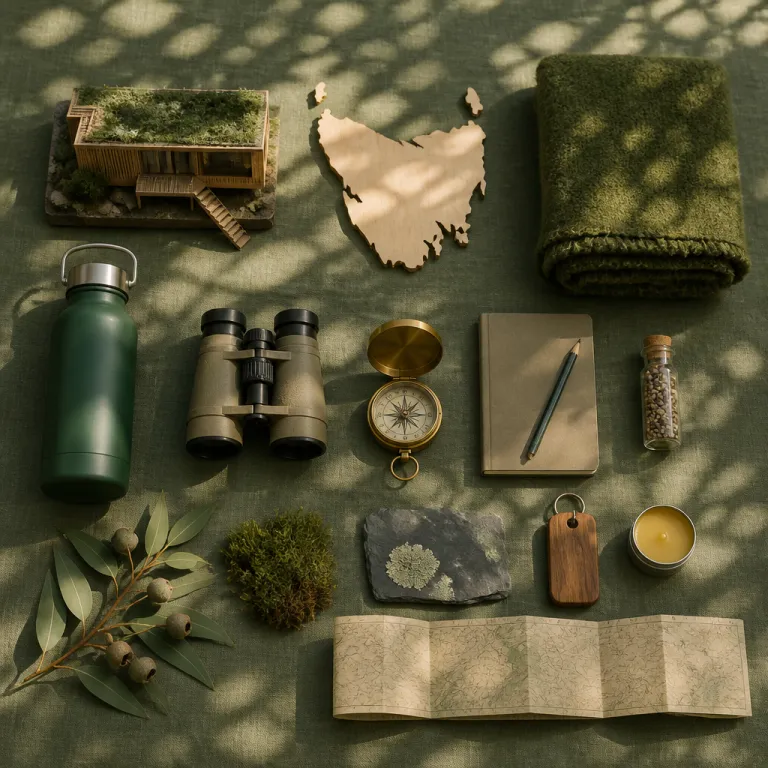
Why tasmania rewilding lodges eco travel speaks to a new Australian mindset
Tasmania rewilding lodges eco travel has emerged as a quiet counterpoint to the usual long haul escape from Australia. For a growing group of domestic travellers, wilderness restoration is not a marketing line but the main reason to travel, and Tasmania’s remote hideaways now sit in the same mental luggage as a trip to Kangaroo Island or the Great Barrier Reef. This is where luxury means time, silence and a clear view of your own values reflected in the landscape.
Across the island, each lodge treats eco design as a baseline and conservation as the real product. Properties such as Thousand Lakes Lodge in the Central Highlands and Tarkine Wilderness Lodge on the rainforest edge are real, operating accommodations that publicly highlight renewable energy, rainwater harvesting and wildlife friendly practices, not just a token green note in the compendium. Other names sometimes used in conversations about Tasmanian eco stays, such as “Wild Heart Lodge” or “Gulkula2 Wildlife Retreat”, are illustrative rather than widely documented properties, so travellers should always confirm current operations and conservation credentials directly with the lodge before booking. The result is a style of lodges Australia can be proud of, where climate change is addressed through on site conservation efforts rather than a vague donation line on your bill.
For an Australian solo explorer, this shift changes how you plan every day of your travel. Instead of asking which resort has the best pool or ocean view, you weigh which conservation park or national park you want to help restore, and which threatened species you hope to see returning. The main SEO keyword tasmania rewilding lodges eco travel captures this mindset neatly, because the same traveller who once chased coral and manta rays on a barrier reef tour now seeks the quiet drama of a southern plateau where the only social media moment might be a shy marsupial at dusk.
What rewilding means in Tasmania, beyond the marketing gloss
Rewilding in Tasmania is not a slogan, it is a set of specific land management decisions. On former grazing country near Thousand Lakes Lodge, that can mean allowing native grasses to reclaim fence lines, creating habitat corridors that link fragmented conservation park parcels with nearby national park estates. In the wet forests around smaller eco retreats and wildlife focused stays, it often involves removing invasive species so local wildlife can move more freely between creek lines and ridges.
Across these sites, conservation efforts focus on species reintroduction, habitat restoration and long term monitoring. Lodges commonly work with local conservation groups, regional tourism bodies and wildlife researchers who bring in solar powered monitoring equipment to track everything from small marsupials to raptors, and guests are often invited to help check cameras or log sightings during a guided tour. As one Tasmanian Parks and Wildlife ranger explained in a 2023 public talk at Lake St Clair Visitor Centre, “rewilding is about giving natural processes room to work again – we remove the biggest pressures, then watch how the country responds over years, not weeks.” One of the most common questions staff hear is very simple: “What is a rewilding lodge?” and the answer they give is equally clear: “A rewilding lodge offers eco-friendly accommodations focused on immersing guests in natural environments and promoting conservation.”
For travellers used to the coastal drama of Western Australia or the reef systems of Queensland, this Tasmanian version of eco travel feels more interior and more patient. You are not chasing manta rays over coral gardens or timing your day around a boat departure on the southern ocean, you are watching weather roll over a plateau and learning how a single fallen tree can shape an entire patch of forest. If you enjoy rainforest style resorts in Australia with lush landscaping and a serene retreat feel, as profiled in our guide to rainforest style resorts, these rewilding lodges offer the wilder, less manicured version of that same instinct.
The lodges leading Tasmania’s rewilding movement
Thousand Lakes Lodge sits in Tasmania’s Central Highlands like a former Antarctic training station turned alpine refuge. The building is solid and low slung, but the interior leans towards understated luxury, with wool throws, generous beds and a lounge where the best view is a shifting sky over button grass and tarns rather than a television. Here, the idea of Tasmanian rewilding lodges becomes tangible when you step outside and realise the old vehicle tracks are slowly softening back into the landscape. With only around nine guest rooms and a strong focus on guided walks, the lodge keeps visitor numbers low enough that nearby tracks rarely feel crowded.
On the forested side of the island, smaller eco retreats and wildlife sanctuaries specialise in close wildlife encounters that feel nothing like a zoo. Wallabies graze near the decks, nocturnal species appear on red light spotlight walks, and families learn how simple actions such as keeping to paths protect fragile understorey plants that feed everything higher up the chain. Tarkine Wilderness Lodge, edging the vast Tarkine rainforest, adds a deeper layer by connecting guests with guides who explain how this southern forest links to wider conservation efforts across Australia south, from the Flinders Ranges to Ikara Flinders National Park, and by limiting capacity to a handful of guests at any one time.
These properties share a philosophy with some of the best conservation led stays on the mainland, such as Arkaba Conservancy in South Australia or coastal retreats near Seal Bay on Kangaroo Island, but the Tasmanian version feels more compact and intense. You are rarely more than a short walk from dense forest or open moorland, and the ocean is never conceptually far away, even when you cannot see the southern ocean itself. Food follows the same pattern: clean, local, often grown or foraged nearby, echoing the culinary focus we highlight in our guide to luxury Australian retreats for food lovers and nature seekers.
The traveller who chooses rewilding over resort glamour
The guest who types tasmania rewilding lodges eco travel into a search bar is usually not chasing a points upgrade. This is the Australian solo explorer who has already stayed at ocean facing resorts in Western Australia, snorkelled over coral on a Great Barrier Reef tour and posted the obligatory social media shot from a deck chair. Now they want something quieter, more demanding and ultimately more rewarding.
They are willing to trade a swim up bar for a long day on foot, moving through a conservation park with a guide who can name every plant and explain how each species fits into a recovering system. A typical day might involve a 6–10 kilometre loop walk with 200–300 metres of elevation, followed by an evening wildlife survey where guests help record sightings of pademelons, quolls or wedge tailed eagles. They will happily pay a premium for a lodge that limits guest numbers, uses solar power and rainwater, and asks them to participate in wildlife monitoring or tree planting instead of scheduling another cocktail class. For this traveller, luxury is not about marble and chrome, it is about being one of only a handful of people in a valley where the loudest sound is wind in the eucalypts.
There is also a subtle shift in how these guests think about the rest of Australia. A stay at a Tasmanian rewilding lodge often sits alongside a previous trip to Arkaba Conservancy in the Flinders Ranges, a walk through Ikara Flinders National Park or a coastal ramble near Seal Bay on Kangaroo Island, rather than a fly and flop holiday near the Great Barrier Reef. They see the country as a connected set of living systems, from the southern ocean to the barrier reef, and they choose lodges Australia wide that treat climate change and conservation efforts as central to the experience, not a footnote.
Planning your own Tasmanian rewilding stay
Booking tasmania rewilding lodges eco travel requires a slightly different mindset from a standard long weekend in a city hotel. You need to book well in advance, especially at smaller properties such as Thousand Lakes Lodge or Tarkine Wilderness Lodge, because guest numbers are deliberately capped to protect the surrounding park and wildlife. As a rule of thumb, aim for three to six months’ notice for peak summer and school holiday periods, and at least eight to ten weeks ahead for shoulder seasons.
Think carefully about your fitness level and how you like to spend each day. Some lodges focus on gentle walks of two to four kilometres, forest bathing sessions and floating saunas on nearby lakes, while others offer more demanding hikes across alpine plateaus or into dense rainforest, sometimes in wet and windy southern conditions. Ask for clear details about distances, elevation and terrain before you travel, and remember that in this part of Australia weather can change quickly, so good layers, waterproof gear and sturdy footwear are essential.
It is also worth considering how a Tasmanian rewilding stay fits into your broader Australian travel map. You might pair a few nights in the highlands with a coastal interlude at one of the ocean focused retreats we feature in our guide to coastal hotels where the ocean is the main amenity, creating a personal circuit from reef to forest to mountain. Whether you are coming from South Australia after time at Arkaba Conservancy, from Western Australia after a coral and manta rays experience, or from a classic Great Barrier Reef holiday, Tasmania’s rewilding lodges offer a reset that feels both deeply local and quietly global in its response to climate change.
How Tasmania compares with mainland conservation stays
For many Australian travellers, the reference points for conservation led stays are still on the mainland. Arkaba Conservancy in South Australia, for example, has become a benchmark for how a former sheep station in the Flinders Ranges can be transformed into a private conservation park with a strong sense of place. Ikara Flinders National Park nearby offers a complementary public land experience, where guided walks explain how traditional owners and modern rangers work together on long term conservation efforts.
Coastal travellers often think first of Kangaroo Island, with its mix of wildlife rich coves, Seal Bay’s sea lion colony and lodges that look out over the southern ocean. Others default to the reef, where a Great Barrier Reef tour still delivers coral gardens, manta rays and tropical species that feel a world away from the cool air of Tasmania. These destinations have earned their reputations, and titles from publications such as Condé Nast Traveler and similar Nast Traveler style lists often highlight them as some of the best eco experiences in Australia.
Tasmania’s rewilding lodges sit alongside these icons rather than competing directly. Where a reef or island stay is about the ocean and the barrier reef, a Tasmanian lodge is about slow time on land, watching how a single valley responds to careful management over years. For a certain kind of guest, choosing eco travel in Tasmania becomes the natural next step after ticking off the classic reef and island circuits, a way to deepen their relationship with Australia itself rather than simply adding another stamp to a passport.
FAQ
What is a rewilding lodge in Tasmania?
A rewilding lodge in Tasmania is an accommodation that places habitat restoration and wildlife conservation at the centre of its operations. Buildings are usually powered by renewable energy, water is carefully managed and guest numbers are limited to reduce pressure on the surrounding environment. Guests are invited to participate in activities such as wildlife monitoring, tree planting or guided ecology walks, turning their stay into a small but meaningful part of a larger conservation story.
Why choose a Tasmanian rewilding lodge over a traditional luxury resort?
A Tasmanian rewilding lodge offers a different definition of luxury, where silence, space and ecological integrity matter more than conventional glamour. Instead of multiple restaurants and a long spa menu, you get clean, local food, expert guides and direct access to wild landscapes with minimal infrastructure. For many Australian travellers, this feels more aligned with their values, especially if they are already concerned about climate change and want their travel spending to support conservation efforts.
Are Tasmanian rewilding lodges suitable for families?
Several Tasmanian rewilding lodges, including family friendly retreats that offer flexible room layouts, welcome children and design activities around different ages. Families can join gentle walks, wildlife spotting sessions and simple conservation tasks that help younger travellers understand how national park and conservation park systems work. The key is to check access, room configurations and activity levels in advance, as some properties are better suited to older children who enjoy longer walks and cooler southern weather.
How far in advance should I book a Tasmanian rewilding lodge?
Because Tasmanian rewilding lodges deliberately keep guest numbers low, they often book out months ahead during peak periods. If you are planning to travel during school holidays or pairing your stay with a wider circuit that includes places such as Kangaroo Island or the Great Barrier Reef, it is wise to secure dates as early as possible. Shoulder seasons can offer more flexibility, but even then, last minute availability is the exception rather than the rule.
What level of digital connectivity should I expect at these lodges?
Most Tasmanian rewilding lodges offer limited or patchy mobile reception and, in some cases, no Wi Fi at all. This is intentional, both to preserve the sense of remoteness and to reduce infrastructure in sensitive landscapes, so you should plan to be largely offline during your stay. If you need to remain reachable, ask the lodge for specific details about coverage and any emergency contact arrangements before you confirm your booking.